PFAS PASS Compliance Systems™
Buying From California or New York Is Not the Same as Buying Compliant Goods
Two failures are happening at once: buyers assume a regulated-state seller means compliant product, and sellers — often the customer service reps speaking for them — don’t seem to know what their own claims now obligate them to prove.
There is a comfortable assumption moving through the textile, fashion, costume and consumer-goods world right now: that a seller established in a serious, regulated market like California or New York must, by virtue of being there, be selling compliant goods.
The law points the other way — and so does what we keep finding when we ask for the paperwork.
California AB 1817 and New York ECL § 37-0121 both took effect on January 1, 2025. They restrict PFAS in textile and apparel products, and AB 1817 requires manufacturers to provide sellers with a signed certificate of compliance. The obligation is created by where you operate and what you do. It is not created by anyone actually meeting it. Location creates the obligation. It does not create the documentation. The space between those two things is where the trouble sits — and right now there are two different people standing in that space, neither of them aware of the other.
Two Failures, One Gap
The buyer assumes too much. The seller knows too little. Both are reading the same situation wrong.
Failure One — The Buyer Side
“They’re in California, so it must be compliant.”
A buyer — a brand sourcing fabric, a retailer accepting a line, a procurement lead outfitting a production — sees a New York or California address and reads it as reassurance. The reasoning feels sound: a regulated state means scrutiny, scrutiny means compliance, compliance means I’m covered.
Every step of that chain is wrong in the same way. A regulated-state location tells you the seller carries an obligation. It tells you nothing about whether the seller met it — and it does not transfer any protection to you. If anything, it should raise the question, not settle it: this party is operating where the duty exists, so where is the document that satisfies it?
The buyer has mistaken the seller’s exposure for the buyer’s protection. Those are opposite things. And when the goods move — transformed in one state, sold or performed in another — the assumption travels with them, unexamined, until someone finally asks for the certificate and discovers it was never there.
Failure Two — The Seller Side
“Of course our products are PFAS-free.” Said by someone with no document behind it.
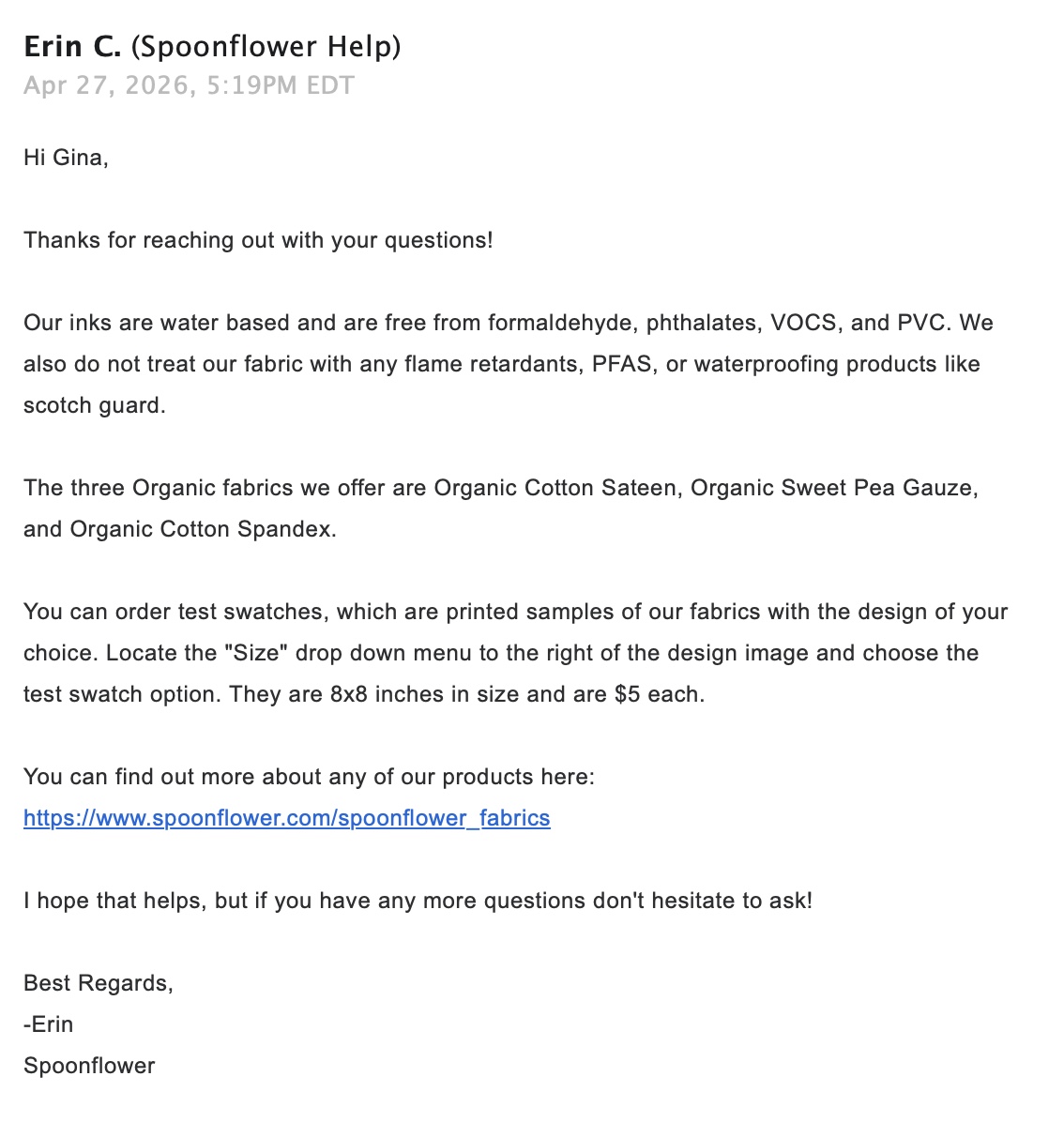
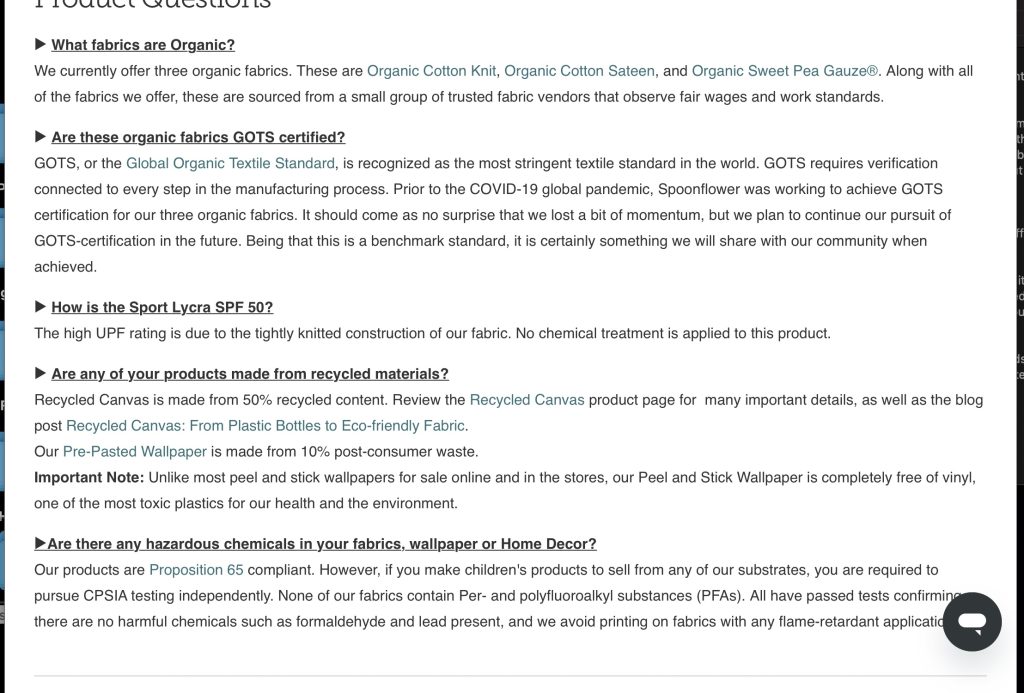
On the other side of the transaction, the claim gets made — frequently by a front-line customer service representative — with apparent confidence and no apparent awareness that the sentence carries weight. “All our fabrics are free of PFAS.” “Completely PFAS-free and Proposition 65 compliant.” These are stated the way a rep might confirm a shipping date.
But an affirmative compliance claim is not a courtesy. Under Section 5 of the FTC Act — and the substantiation principle reflected in the FTC’s Green Guides, which are guidance under Section 5, not an “Act” of their own — a claim you cannot substantiate is a problem on its own terms, in any state. The rep saying it almost certainly doesn’t know that. The company may not have prepared them to know it. That is precisely the blind spot: the people speaking for the seller are being set up to make representations their organization has no documentation to support.
Here is how cleanly the two failures meet. In the investigation series, the same support channel will sometimes assert a product is “completely free of PFAS” and, in a different message on the same matter, concede that it cannot guarantee its mills don’t use PFAS and that outside testing on the finished product would be required for full assurance. The confident claim and the honest admission come from the same seller. The buyer who relied on the first never sees the second.
That pattern is described generally and scoped to the case studies examined to date; it is not a statement about every seller.
Why a claim keeps failing to become evidence
The reason both sides get this wrong is that a claim and a compliance document are different categories of thing, and most of the market treats them as interchangeable:
- A sustainability report is a corporate narrative. It is not a PFAS test result.
- A recycled-content credential tells you where the feedstock came from. It tells you nothing about whether the finished material is PFAS-free — recycled does not mean clean.
- Words like eco, green, coated, treated and Prop 65 compliant describe an intention or a different regulation entirely. None of them substantiate a PFAS-free claim.
A compliance document has numbers on it.
Lab results. Not assurances, not adjectives, not a logo.
One more distinction that changes the legal picture and is easy to get backwards: “selling out of” a regulated state and “selling into” one are not the same thing. They attach obligations at different points and to different parties. The error almost always runs toward false comfort — which is exactly the buyer’s mistake and the seller’s blind spot, restated in legal terms.
Wherever you sit in the chain, the gap finds you
Whether you are the one assuming or the one claiming, there is a documentation-driven system built for your position. Find yourself below.
| If you are a… | The gap shows up as… | The system built for it |
|---|---|---|
| Brand or production team | Sourcing on the assumption your suppliers are covered, and building new goods that repeat the gap. | Audit System™ (existing inventory) → Design Development & Build System™ (new production) |
| Retailer, reseller or marketplace | Accepting brands on their say-so — liability walking in with every unscreened SKU. | Retailer / Reseller Intake System™ |
| Supplier, mill or manufacturer | Buyers now asking for a certificate of compliance you have no standardized way to produce. | Supplier Compliance System™ |
| Team whose reps keep getting blindsided | Front-line staff making compliance claims no one prepared them to back up. | Educational & Training System™ |
| Buyer, performer or procurement lead | No visibility into what was ever documented — and no structured way to ask. | End User System™ |
None of these systems is a lab certification, and none is legal advice. They are documentation-driven frameworks — ways to build a defensible record of what was asked, what was claimed, what was substantiated, and what was not. In a regulated market, that record is the difference between an assumption and a position you can stand behind.
A reasonable first step
If you are a buyer, take one document a seller has given you — an assurance, a certificate, a sustainability claim — and ask whether it has numbers on it that actually speak to PFAS. If you are a seller, ask whether the claim your team makes every day has a document behind it. In both cases, if you’re not certain, that uncertainty is the finding.
Test one document first. The Rapid Document Review™ runs a single supplier document through a structured evaluation and returns one of two clear outcomes — Requirements Met or Requirements Not Met — against applicable law.
Start a Rapid Document Review™ →
Address the whole picture. If your exposure is broader than one document — an inventory, a production line, a marketplace, a supplier base, a customer-facing team — request pricing and access. The intake form routes you to the system built for your category and scale.
The buyers who handle this well will not be the ones who assumed correctly. The sellers who handle it well will not be the ones who guessed their reps were saying the right thing. Both will be the ones who built the record before anyone asked for it.
PFAS PASS Compliance Systems™ are documentation-driven compliance frameworks. They are not legal advice and not laboratory certification. Regulatory references — including California AB 1817, New York ECL § 37-0121, and Section 5 of the FTC Act and its Green Guides — are provided for general context and should be reviewed with qualified counsel for your specific situation. Patterns described in the PFAS PASS investigation series are scoped to the case studies examined to date.