Compliance Build Series · SNCN-01
Your Supplier Said It. Can They Prove It?
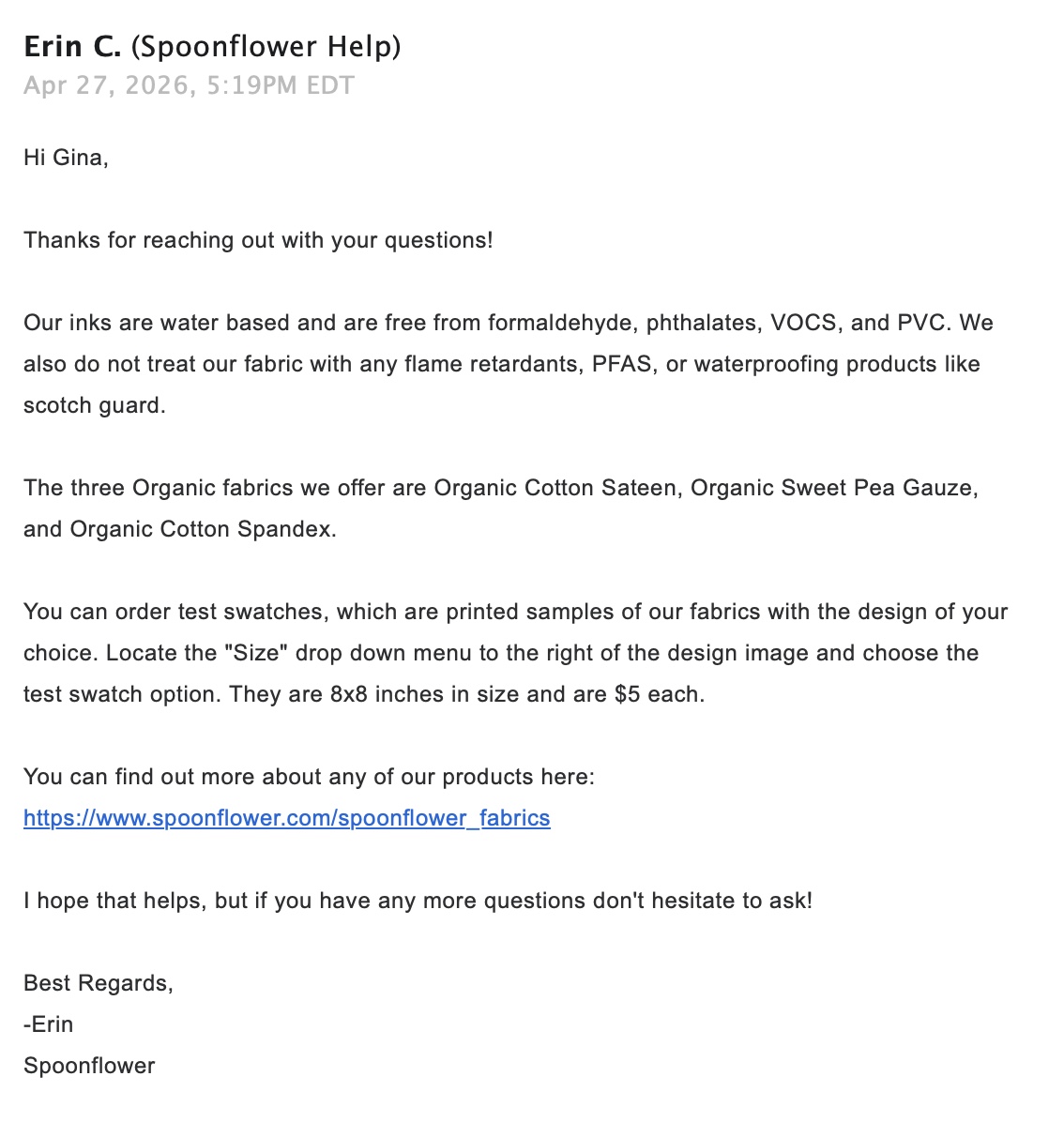
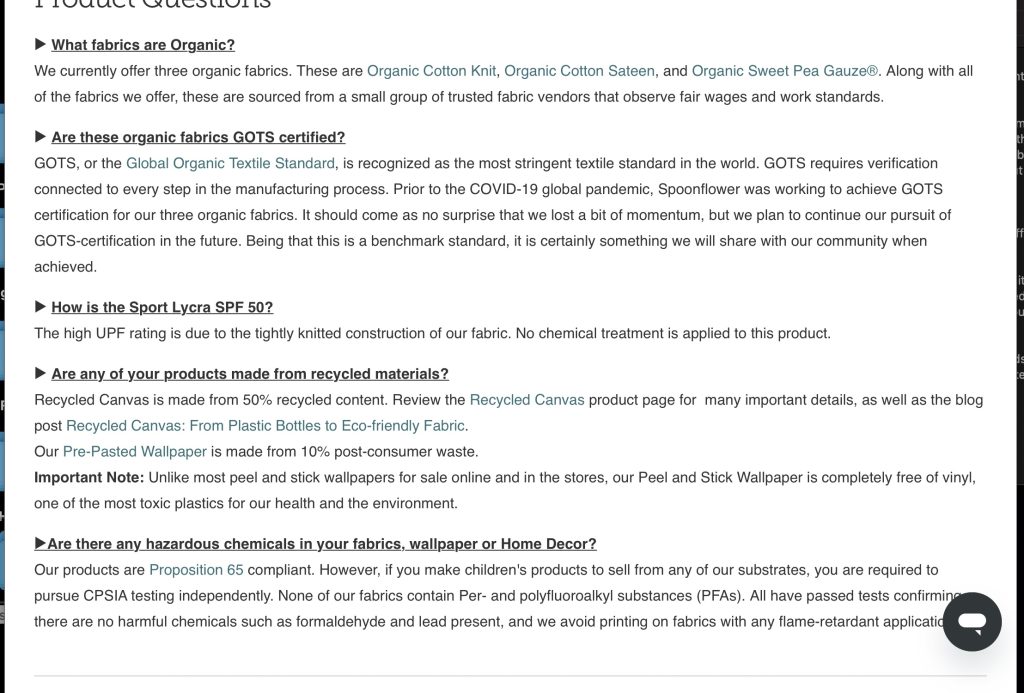
You asked your supplier if their fabric is PFAS-free. They said yes. Maybe it’s on the spec sheet. Maybe it’s in an email. Maybe it’s printed right on their product listing. Maybe a sales rep said it on a call and followed up with a one-liner in writing.
Now ask yourself: do you have anything that actually proves it?
A supplier statement is not evidence. It is a claim. And in the current regulatory environment, the gap between a claim and its proof is where your liability lives.
In the textile, hardware, and notions supply chain, PFAS compliance claims are currently outpacing the documentation infrastructure behind them by a wide margin. Brands are receiving assurances — in emails, on invoices, in sales conversations — that fabrics, DWR coatings, snap fasteners, zippers, and trims are PFAS-free. Many of those assurances are made in good faith. Some are not. Almost none of them arrive with the third-party lab reports, Certificates of Conformance, or RSL documentation that would make the claim verifiable by an outside party.
Why This Matters More Right Now, Not Less
There is a misconception circulating in some corners of the industry: that softening federal PFAS enforcement signals a compliance reprieve for brands. It doesn’t.
State-level PFAS product restrictions are active and expanding completely independent of federal posture. California SB 903 and AB 1817 are in phased enforcement. Maine, Minnesota, Washington, and Colorado have enacted or are implementing broad PFAS-in-products restrictions covering apparel, accessories, and treated articles. EU REACH’s proposed universal PFAS restriction would sweep in textiles, coatings, and hardware components traded internationally.
Retailer compliance programs — from major outdoor brands to fast fashion auditors — are not pausing for political cycles. And consumer litigation in PFAS-related product liability is increasing, not decreasing.
The brands that will be most exposed when enforcement tightens again are the ones who used this window to do nothing. A documented compliance posture built now, during a period of regulatory uncertainty, is worth considerably more than one assembled after the fact. Auditors and courts look at timestamps. The PFAS PASS Compliance Systems were built specifically to give brands that documented infrastructure before they need to defend it. [LINK: https://pfaspass.com/pfas-pass-compliance-systems/]
What “Due Diligence” Actually Requires
When a supplier cannot or will not provide substantiating documentation for a PFAS compliance claim, the worst thing a brand can do is nothing. The second worst is sending a casual follow-up email and moving on.
What the situation requires is what we call a Supplier Non-Compliance Notification (SNCN) — a formal written record that does specific, documented work.
Step 1: Identify the specific item under claim By name, SKU, category — textile, hardware, or notions — date of claim, and medium. Vague references don’t hold up. Specificity does.
Step 2: Attach the supplier’s original claim in writing Screenshot, email forward, spec sheet excerpt — verbatim and dated. This is Exhibit A. It anchors their representation to a specific transaction.
Step 3: Attach the purchase record or sales receipt This is Exhibit B. It ties the compliance claim to actual commerce — a product you paid for and will sell or use.
Step 4: Formally notify the supplier in writing State that the claim is unsubstantiated as of the notification date. State that the claim and notification will be retained in your compliance file and made available in any future audit or legal proceeding.
Step 5: Give a defined cure period 30, 45, or 60 days is standard. The supplier gets an opportunity to provide verifiable documentation. Document what happens when that window closes.
What Counts as Substantiation?
Not all documentation is equal, and the category of the item matters. Here is what you should be asking for, by product type.
Textiles — Fabric, Coatings, DWR Treatments, Yarn, Fiber
— Third-party lab test results confirming absence of PFAS compounds including PFOA, PFOS, and related homologs — DWR formulation disclosure confirming fluorine-free chemistry. “PFAS-free DWR” is not sufficient without the chemistry disclosure — RSL / MRSL compliance documentation referencing PFAS-specific restrictions by name — Certificate of Conformance from the fiber, yarn, or fabric mill — not just the distributor
Hardware & Notions — Snaps, Zippers, Buttons, Buckles, Tapes, Trims
— Lab analysis confirming absence of PFAS in surface coatings, platings, or lubricants applied during manufacturing — SDS / MSDS documentation referencing PFAS-relevant chemical absence — specifically in coatings and treatments, not just base metal — Supplier Declaration of Conformance identifying the specific hardware item and affirming PFAS-free manufacturing inputs — Country of origin processing records where applicable — particularly relevant for electroplated or coated metal hardware sourced internationally
Know Your Risk Before You Challenge the Claim
Not sure whether your specific fabric, finish, coating, or hardware component is high risk to begin with?
That’s the starting point — because before you can challenge a supplier’s claim effectively, you need to know what you’re looking for and which inputs carry the highest PFAS exposure in your product category.
The PFAS Compliance Playbook — Fabric Deep Dive Edition covers over 100 fabric types, fiber classifications, coatings, laminates, and finishing treatments with risk classification for each. If your supplier is claiming a DWR-treated shell or a coated performance fabric is PFAS-free, this is your reference for understanding exactly what that claim needs to cover and why it matters. High-risk finishes, safe alternatives, and the specific chemistry questions to ask are all mapped out by fabric category.
The PFAS Compliance Playbook — Hardware, Notions & Construction Systems Deep Dive Edition covers closures, fasteners, adhesive systems, fusible and bonded systems, coated trims, elastic, webbing, hook-and-loop, and embellishment systems. Surface coatings and lubricants on metal hardware are a primary PFAS exposure vector that most brands don’t think to question. This edition tells you what to look for by component type, what high-risk construction inputs look like, and what safe alternatives exist.
Both are available free through the PFAS PASS Compliance Library.
What Happens When the Supplier Refuses
Some suppliers will receive a formal notification and still not provide documentation. They may not respond at all. That non-response is itself a compliance record.
A documented cure period that expires without substantiation tells a future auditor exactly where the evidentiary failure originated. It is not a perfect outcome — but it is a defensible one for the brand that executed the process correctly.
What a brand does after that window closes — whether they continue purchasing and selling goods from a non-compliant supplier — is a separate decision that carries its own liability weight. The notification letter covers you up to that decision point. What comes after it is a business and legal judgment that must be made with eyes open.
If you’re at the point of evaluating whether to continue with a supplier who won’t substantiate, the PFAS PASS Verified Registry is a practical place to start. The Registry is a reference point for suppliers who have entered the PFAS PASS verification pathway — giving brands a starting point for sourcing conversations with suppliers already operating within a documented compliance framework, rather than making claims they can’t support. If a supplier tells you they’re PFAS compliant, the Registry is also a reasonable first question: are they in it? [LINK: https://pfaspass.com/pfas-pass-verified-registry-page/]
This is why the notification letter works as an interim published method: it doesn’t require regulatory action, supplier cooperation, or legal proceedings to do its job. It creates a timestamped, versioned, auditable record of your compliance effort — which is what due diligence looks like in the absence of supplier proof.
Get the SNCN-01 Letter
The fillable PDF is available free through the PFAS PASS Compliance Library — versioned, document-stamped, and formatted for your compliance file. Download it, complete every field, attach your exhibits, and send it with proof of transmission. The method is exactly what you just read.
This Is One Document in a Larger System
A single notification letter, executed well, is a meaningful protective measure. But it is one document in what should be a layered compliance architecture — supplier onboarding requirements, claims verification checkpoints, documentation retention protocols, and audit-ready filing systems built for the realities of textile and notions supply chains.
Here is the complete reader path this post is designed to support:
Know your risk → PFAS Compliance Playbook Fabric Deep Dive + Hardware & Notions Deep Dive
Challenge the claim → SNCN-01 Supplier Non-Compliance Notification Letter
Supplier won’t comply → PFAS PASS Verified Registry for alternative sourcing reference
Want the full system → PFAS PASS Compliance Systems
This post is part of the PFAS PASS Compliance Build Series — a running publication of the methods, documents, and frameworks that make up the full compliance system. Each document in the series is designed to stand alone and work together.
Disclaimer: Content published by PFAS PASS Compliance Systems is educational and intended to support compliance documentation practices. It does not constitute legal advice. Consult qualified legal counsel for jurisdiction-specific compliance guidance, regulatory interpretation, or litigation strategy.
© PFAS PASS Compliance Systems · PFASPASS.COM